The 57 Best Shoulder Exercises for Your Workout
A good shoulder workout trains all three deltoid heads — anterior (front), lateral (side), and posterior (rear) — plus the rotator cuff stabilizers. The lateral head contributes the most to visually "wide shoulders," but it's the one that gets the least direct stimulus day to day, since presses and bench work already hit the anterior head plenty.
On this page you'll find 57 shoulder exercises curated by Befit, with execution videos, grip tips, and variations for the gym, home gym, and bodyweight training. Every exercise has been reviewed by a fitness professional specialized in strength training.
If you already know what you want, use the level and equipment filters to jump straight to the right exercise. If you'd rather start somewhere, check the top 10 below — the movements with the strongest consensus for shoulder hypertrophy and strength.
And if you want a shoulder workout built from scratch, personalized to your goal, your time, and your equipment, that's exactly what the Befit app does automatically.
How to build your Shoulders workout
Volume per session: 4 to 5 exercises, 12 to 18 total sets.
Movement split: 1 press (dumbbell or machine shoulder press), 2 lateral raises (dumbbell and cable), and 1 rear-delt move (reverse machine fly or a front raise for the anterior head).
Sets and reps: lateral raises respond well to 3 to 4 sets of 12 to 15 reps (small muscle, more volume with moderate load); presses do well with 3 sets of 6 to 10.
Frequency: twice a week is the sweet spot between stimulus and recovery for most people.
Top Shoulders exercises
| # | Exercise | Level | Equipment | Muscle focus | |
|---|---|---|---|---|---|
| 1 |
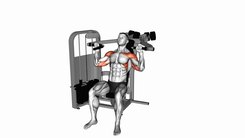 Iso Lateral Shoulder Press Both Arms |
Beginner | Shoulder Press Machine | Shoulders | See execution |
| 2 |
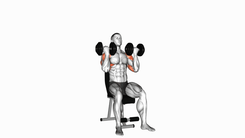
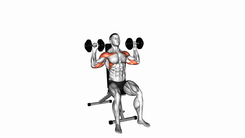 Dumbbell Seated Shoulder Press |
Intermediate | Dumbbells | Shoulders | See execution |
| 3 |
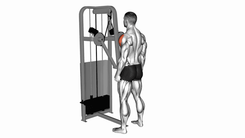
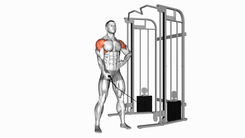 Lateral raises on cable |
Beginner | Dual cable pulley machine | Shoulders | See execution |
| 4 |
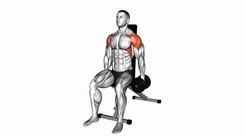 Dumbbell Seated Lateral Raise |
Beginner | Dumbbells | Shoulders | See execution |
| 5 |
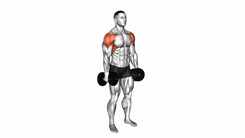 Lateral raises dumbell |
Intermediate | Dumbbells | Shoulders | See execution |
| 6 |
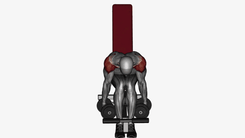
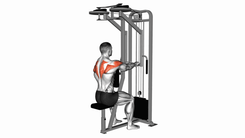 Reverse machine fly |
Beginner | Dual pec deck fly machine | Shoulders | See execution |
| 7 |
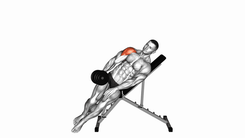
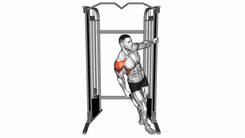 Cable Leaning Lateral Raise |
Intermediate | Dual cable pulley machine | Shoulders | See execution |
| 8 |
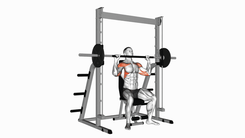 Smith Seated Shoulder Press |
Advanced | Smith machine | Shoulders | See execution |
| 9 |
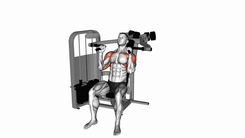 Lever Seated Hammer Grip Shoulder Press |
Beginner | Shoulder Press Machine | Shoulders | See execution |
| 10 |
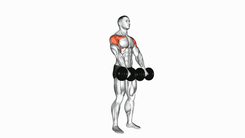 Standing front raise dumbell |
Beginner | Dumbbells | Shoulders | See execution |
Iso Lateral Shoulder Press Both Arms
Dumbbell Seated Shoulder Press
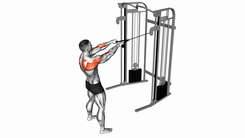
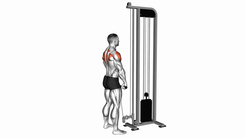
Lateral raises on cable
Dumbbell Seated Lateral Raise
Lateral raises dumbell
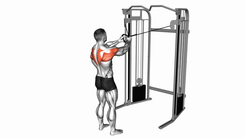
Reverse machine fly
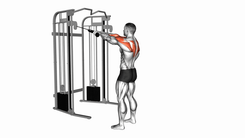
Cable Leaning Lateral Raise
Smith Seated Shoulder Press
Lever Seated Hammer Grip Shoulder Press
Standing front raise dumbell
All 56 Shoulders exercises
Shoulders workout at home vs. at the gym
Training shoulders at home works well with a pair of dumbbells — the most versatile piece of equipment for this muscle group, covering all 3 deltoid heads without needing anything else.
With dumbbells you can do a seated or standing press, lateral raise, front raise, and upright row. A resistance band pairs nicely for lateral raises, adding progressive tension throughout the movement.
At the gym, the toolkit is bigger. You've got a shoulder press machine, a cable machine for lateral raises (constant tension, unlike dumbbells), a reverse pec deck for the rear delt, and a Smith machine for a guided-path press.
Use the Bodyweight or Home Gym filter above to see only exercises that fit your setup.
How Befit builds your Shoulders workout with AI
Picking an exercise is only half the problem. The other half is: how many sets, how many reps, what load, in what order, when to switch things up. And that changes every week as you progress.
Befit solves this with an AI that builds a personalized training plan for your goal (hypertrophy, strength, definition), your level, your time per session, and your equipment. Every week, the algorithm adjusts volume and load based on what you've logged.
You don't need to know how to program periodization. Just train and log it.

Safety tips for Shoulders training
- Avoid raising your arm past shoulder height (parallel to the floor) on lateral raises. Going higher activates more trapezius than deltoid and increases the risk of shoulder impingement.
- On shoulder press, don't lower the bar or dumbbells past the point where your elbow forms roughly 90°. Going too low behind your head overloads the shoulder joint without extra benefit.
- Warm up the rotator cuff (light external rotation with a band) before any heavy pressing — it's the muscle group that stabilizes the shoulder throughout the movement.
- Avoid upright rows with a very narrow grip and elbows above shoulder height — that combination is linked to a higher risk of shoulder impingement.
- Rest at least 48 hours between shoulder sessions.
Frequently asked questions about Shoulders training
-
How many exercises should I do for a shoulder workout?
An effective shoulder workout has 4 to 5 exercises per session, covering a press, lateral raises (the most important move for the middle deltoid), and at least 1 exercise for the rear deltoid. Total volume between 12 and 18 sets per week works well for hypertrophy.
-
How many sets and reps for shoulder hypertrophy?
Lateral raises respond better to higher reps (12 to 15) with moderate load, since it's a small muscle more prone to trapezius compensation under heavy loads. Presses do well with 3 sets of 6 to 10 reps, closer to a strength-focused pattern.
-
What's the best beginner shoulder workout?
For beginners, a solid shoulder workout has 3 exercises: a seated dumbbell press (more stable than standing), a dumbbell lateral raise, and a front raise. Start with light load — the shoulder is a sensitive joint, and movement pattern matters more than load early on.
-
Can you train shoulders at home?
Yes. A pair of dumbbells covers presses, lateral raises, front raises, and upright rows — the 4 main movements for all 3 deltoid heads. Use the Bodyweight filter in the exercise list above.
-
What other muscle group pairs well with shoulders?
Shoulders pair well with chest or triceps, since the anterior deltoid is already activated during chest press exercises. Suggested order: chest first (compound lifts), shoulders after (raises and presses), finishing with a rear-delt isolation move.
-
How many times a week should I train shoulders?
Twice a week is the sweet spot between stimulus and recovery for most people, considering shoulders also get indirect stimulus on chest and back days. Beginners get good results with one dedicated session a week in the first few months.
-
What's the best exercise for the lateral deltoid (wide shoulders)?
The lateral raise, with dumbbells or on a cable, shows the highest isolated activation of the medial (lateral) deltoid — the head that contributes most to the visual width of the shoulder. The cable version keeps constant tension throughout the movement, unlike dumbbells, where tension drops at the top.
-
How do I know I'm training shoulders the right way?
You should feel the deltoid (the "ball" at the tip of the shoulder) working, not the trapezius (neck area) or the elbow. If your neck tenses up a lot during lateral raises, you're probably using momentum or raising your arm too high. Film a set and compare it to the execution video on Befit.