Pulse Lunge
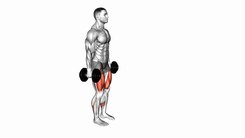
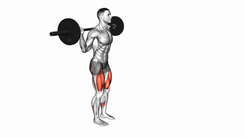
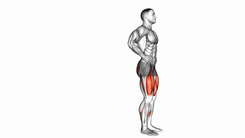
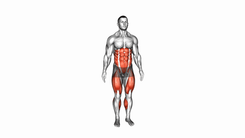
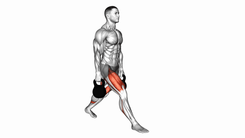
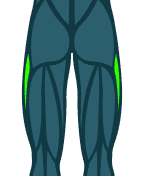
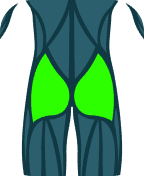
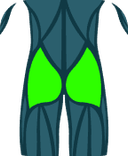
The bodyweight pulse forward lunge is a leg exercise that targets the quadriceps, glutes, and hamstrings, with an added emphasis on muscular endurance due to the pause at the bottom. It's excellent for improving unilateral strength and balance, suitable for all fitness levels looking to increase intensity without additional load.
Key Benefits
- Boosts muscular endurance in the legs and glutes due to increased time under tension.
- Improves unilateral balance and stability, crucial for daily activities and sports.
- Strengthens the core, which helps stabilize the torso during the movement.
- Great for warm-ups or as part of an equipment-free leg workout.

Instructions
- Stand with your feet hip-width apart, arms at your sides.
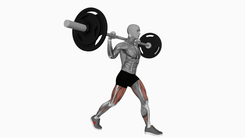
- Step forward with one leg, placing the foot completely on the ground, bend your knees, lowering your body until the back knee is close to the ground (without touching) and the front forms a 90° angle.
- Perform a short up-and-down movement (pumping) with a small amplitude.
- After one pulse, push with the front leg to return to the starting position and repeat.
Tips
- Keep your torso upright throughout the movement, avoid leaning your body forward.
- Engage the core to protect the lower back and improve stability.
- Avoid pushing your knee inward when performing the lunge and pumping.
Restrictions
Avoid if you have acute knee, ankle, or hip pain. Individuals with significant balance issues or recent lower-body injuries should consult a professional before performing. Modify the lunge depth if you experience discomfort or instability.
Common Mistakes to Avoid
- Leaning the torso too far forward, straining the lower back.
- Not keeping the back knee pointing towards the ground, losing proper activation.
- Allowing the front knee to go past the ankle, increasing pressure on the joint.
Frequently Asked Questions
-
What muscles do bodyweight pulse forward lunges work?
Mainly the quadriceps, glutes, and hamstrings, while also engaging the core for stabilization.
-
What's the difference between a lunge and a pulse lunge?
A pulse lunge includes a brief pause or 'pulse' at the bottom of the movement, increasing time under tension and muscular endurance.
-
Can I do pulse lunges with weights?
Yes, you can hold dumbbells or kettlebells to increase intensity, provided your form remains correct.
Target Muscle
Primary
Secondary