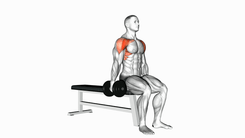
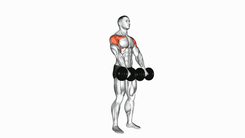
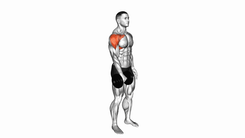
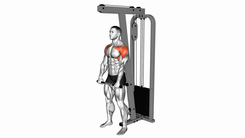
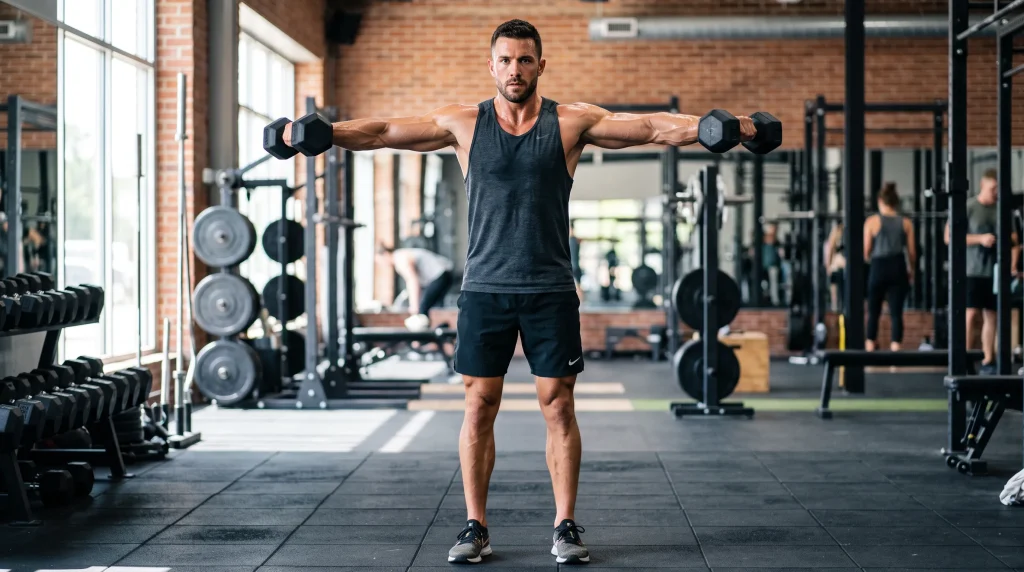
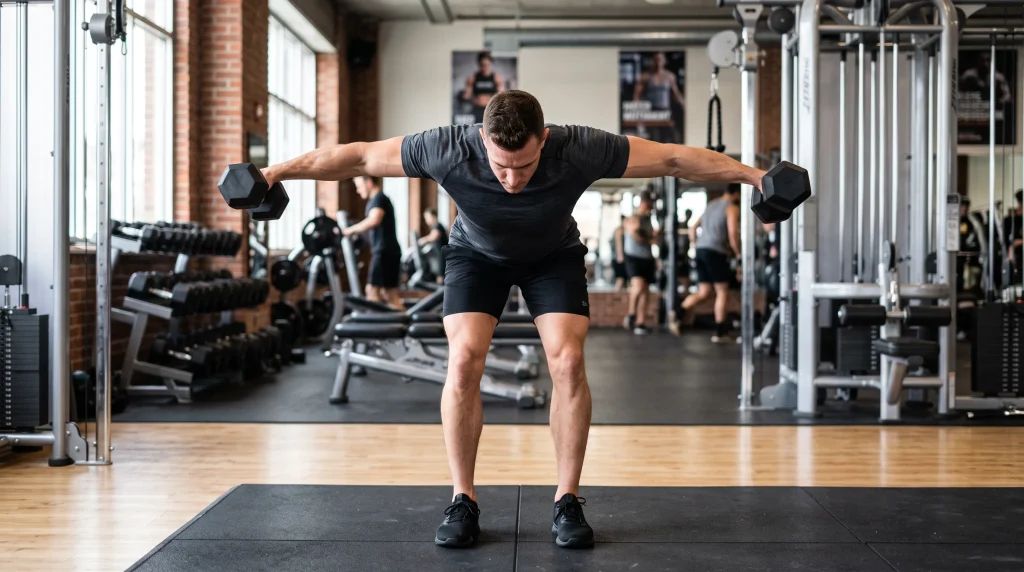
Dumbbell Seated Front Raise
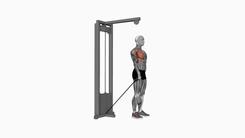
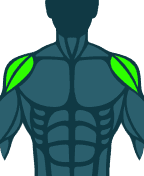
The dumbbell seated front raise is an isolation exercise for the shoulders, specifically targeting the anterior (front) portion of the deltoid. Performing it seated minimizes body momentum, ensuring the target muscle does the primary work. It's ideal for those looking to define and strengthen the front of their shoulders, improving both stability and aesthetics.
Primary Equipment
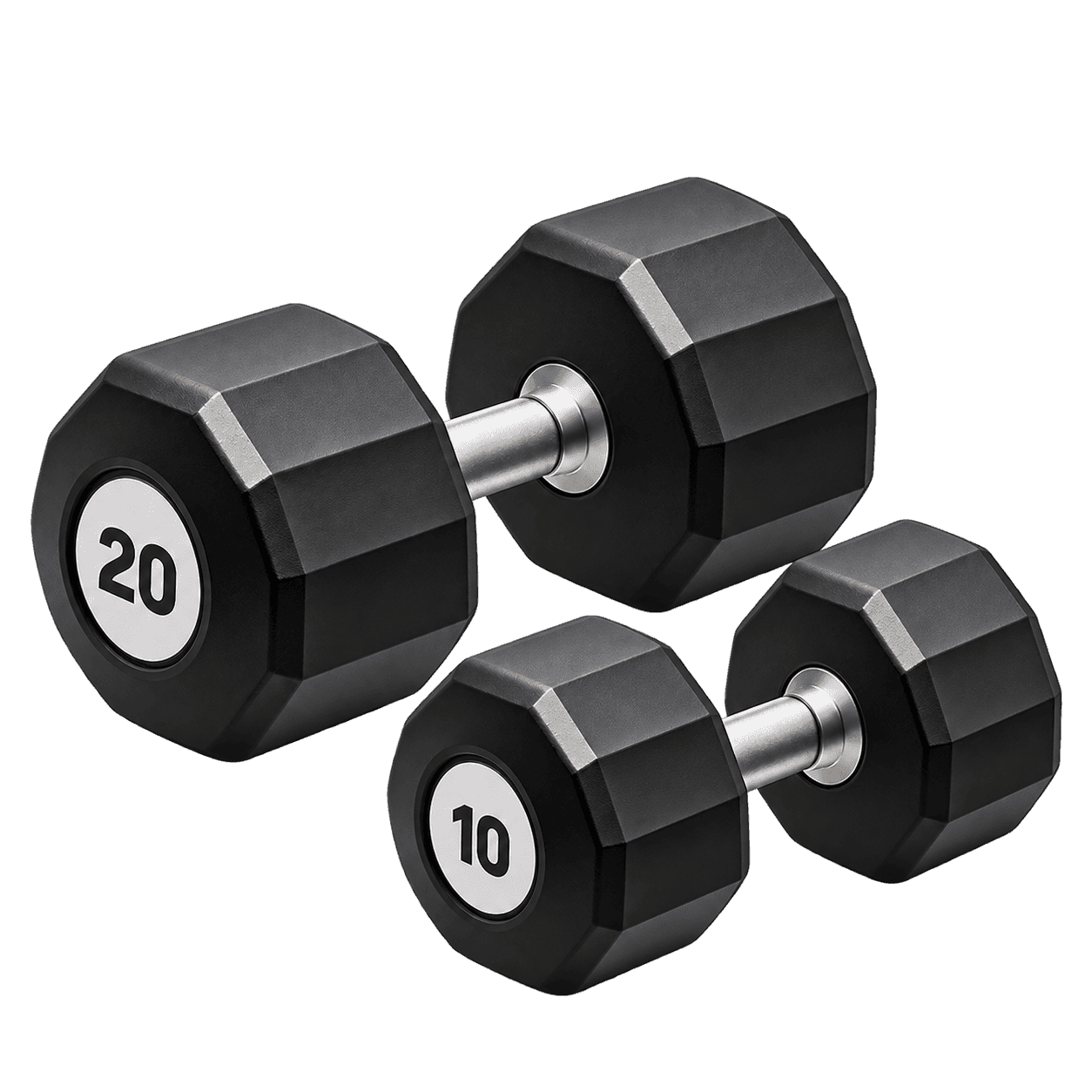 Dumbbells
Key Benefits
- Effectively isolates the anterior deltoid, promoting hypertrophy and strength.
- Reduces momentum, ensuring greater muscle activation and lower risk of compensatory injuries.
- Improves shoulder stability and muscular coordination.
- Contributes to more defined and aesthetically balanced shoulders.
Instructions
- Sit with the dumbbells at your sides, near your hips
- Lift the dumbbells to shoulder height
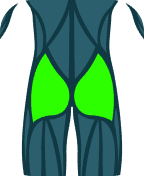
- Contract your abdomen and glutes to stabilize your torso
- Perform the movement in a controlled manner
Tips
- Avoid using momentum or sudden movements
- Avoid shrugging your shoulders
- Do not move your torso excessively
Restrictions
Individuals with a history of shoulder injuries, such as impingement syndrome or tendinitis, should exercise caution and consult a professional. If you experience neck or shoulder pain during the movement, reduce the load or range of motion. Avoid if there is shoulder joint instability.
Common Mistakes to Avoid
- Using excessive loads, compensating with the torso or swinging the dumbbells.
- Raising the dumbbells above shoulder height, overworking the trapezius and rotator cuff.
- Not controlling the eccentric (lowering) phase, losing muscle tension and exercise benefits.
Frequently Asked Questions
-
What muscles do dumbbell seated front raises work?
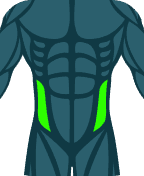
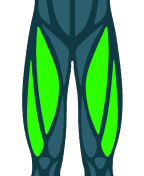
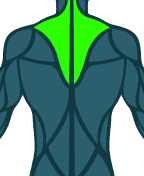
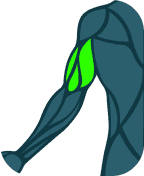
Primarily the anterior deltoid (front of the shoulder) and, to a lesser extent, the lateral deltoid and trapezius.
-
What is the difference between seated and standing front raises?
The seated version minimizes body momentum, isolating the shoulder more. The standing version allows for slightly more weight but with a higher risk of compensation.
-
What is the ideal height to raise the dumbbells?
Dumbbells should be raised to shoulder height, forming an approximate 90-degree angle with the torso. Raising them higher can overwork the trapezius.